Hormonal acne is not simply caused by having “too many hormones.” The key issue is how hormones called androgens affect the skin.
Androgens such as testosterone can stimulate the sebaceous glands to produce more sebum (oil). Increased oil production, together with abnormal buildup of skin cells inside the follicle, can clog pores. Inflammation then contributes to the formation of pimples and deeper acne lesions.
Hormonal fluctuations can make this process more noticeable. For some women, breakouts become worse around their menstrual period, during pregnancy, perimenopause or after starting or stopping hormonal contraception. Stress can also contribute to flare-ups through hormonal pathways.
Hormonal acne often appears around the lower face, jawline and neck, although acne can occur elsewhere too.
Can skincare treat hormonal acne?
Skincare can help manage the skin-level effects of hormonal acne, even though an over-the-counter serum cannot correct an underlying hormonal disorder.
The American Academy of Dermatology lists azelaic acid and salicylic acid among recommended topical acne treatments. Azelaic acid can help unclog pores, reduce inflammation and improve the dark marks that may remain after acne.
A StyleUp option to consider
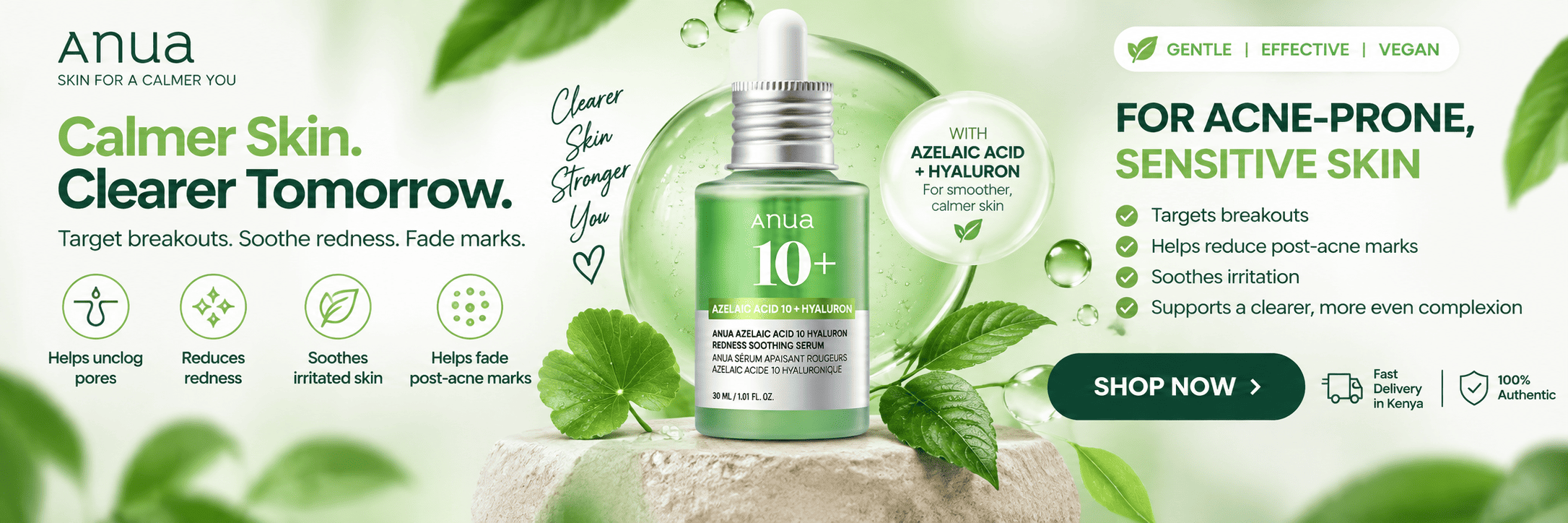
Anua Azelaic Acid 10 Hyaluron Redness Soothing Serum — KSh 3,200 is currently available at StyleUp Beauty & Skincare.
If your acne is persistent, painful, leaving scars, or accompanied by irregular periods or other signs of hormonal imbalance, speak with a dermatologist or healthcare professional. Hormonal treatments such as certain oral contraceptives or spironolactone may be appropriate for some patients, but they require professional assessment.
The takeaway: hormonal acne starts with a complex interaction between hormones, oil production, follicular blockage and inflammation—not one single “bad hormone.”